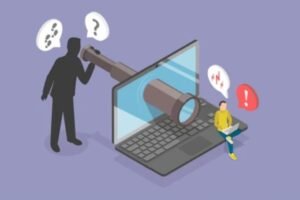
I didn’t set out to write about AI (Cybersecurity) risk. Over last few months, I kept noticing same pattern, smart people, senior/experienced IT professionals, using AI tools in ways that would never pass even a basic information security review. Not because they didn’t know better. But because (AI) tools made it feel safe. Simple. Harmless. That’s exactly the problem. In process, we’re quietly removing human element and replacing it with “false sense of security”.
Fact is that easier AI becomes to use, easier it is to forget it’s still a software, connected, complex, part of your cyberattack surface. That realization is what prompted me to write this article.
- False Sense of Safety
A false sense of safety in AI deployment emerges when simplicity is mistaken for security.
Emerging real-world use highlights a deeper issue i.e. growing perception of AI as a “magic bullet.”
In practice, this assumption has already led to sensitive data exposure, insecure implementations, and reduced oversight. A notable example (2023) involved engineers at Samsung Electronics, who unintentionally leaked proprietary code by submitting it to an AI system for assistance.
No sophisticated attack was required, only misplaced trust in simplicity. When AI is treated as inherently safe rather than operationally complex, risk does not disappear, rather it becomes invisible.
A false sense of safety in AI deployment arises when organizations equate narrow, pre-deployment benchmarks with absolute security, resulting in skipped checks, over-reliance, and hidden system-level vulnerabilities. This complacency, often driven by “box-checking” compliance and lack of continuous monitoring, masks risks such as algorithmic bias, data drift, and adversarial attacks. It’s worth noting that AI still ideal for large data process & ‘routine tasks’.
Key factors contributing to this illusion of security include:
- Inadequate Evaluation: Safety tests often fail to reflect real-world complexity, leading to overconfidence in AI capabilities and improper, rapid adoption.
- Neglecting Systemic Risks: A narrow focus on individual component safety ignores broader, catastrophic system-level failures, notes The Collective Intelligence Project.
- “Black Box” Trust: Explainable AI (XAI) methods can be misleading, giving operators a false sense of understanding and trust.
- Lack of Post-Deployment Monitoring: Models can change, drift, or degrade in performance after deployment, creating unforeseen dangers if not continuously monitored, says a report on PubMed Central (PMC) (.gov).
- Human Over-reliance: Overconfidence leads to reduced human oversight, allowing AI errors or biases to go unnoticed in critical decisions.
To counter this, organizations must implement continuous, rigorous, and diverse testing, along with robust, ongoing (Human) oversight throughout entire AI lifecycle, rather than relying solely on pre-deployment checks.
When AI tools feel simple, such as chatting or clicking a button, people assume they’re safe.
Risk: Users may paste sensitive data (passwords, client info, internal documents) without thinking.
Why it’s dangerous: AI systems often process data externally or log inputs. That “easy” interface hides where a dataset actually goes.
- Shadow IT Explosion
Easy AI = employees using tools without approval.
Risk: Staff start using random AI tools for work (summaries, code, reports).
Why it’s dangerous:
- No security vetting
- No data governance
- Possible data leakage to third-party systems
This is already happening widely in many organzations.
- Prompt Injection & Social Engineering
AI systems can be manipulated through cleverly crafted inputs.
Risk: Attackers embed malicious instructions in:
- Documents
- Emails
- Web pages
Example: An AI assistant reading a document might be tricked into:
- Revealing secrets
- Ignoring safety rules
- Executing unintended actions
Why it’s dangerous: Simpler the interface, less end users question outputs.
- Over-trust in AI Outputs
If something is easy and polished, people trust it more.
Risk: Users act on AI-generated:
- Code
- Security configs
- Recommendations
Why it’s dangerous:
AI can confidently produce insecure or incorrect solutions, such as vulnerable code or flawed security advice.
- Hidden Complexity = Hidden Attack Surface
Behind a simple UI is a complex system:
- APIs
- Plugins
- Data pipelines
- Integrations
Risk: Each connection is a potential entry point.
Why it’s dangerous: Users don’t see:
- What systems are connected
- What permissions are granted
So, they unknowingly expand cyber-attack surface.
- Credential & Token Leakage
AI tools often integrate with other systems (Google Drive, Slack, GitHub, etc.).
Risk:
- Tokens or API keys may be exposed
- AI may accidentally surface sensitive info
Why it’s dangerous: A single compromised integration can cascade across systems.
- Data Poisoning (Subtle but Serious)
AI systems can be influenced by data they process.
Risk: Attackers feed malicious or misleading data.
Why it’s dangerous:
- AI outputs become biased or harmful
- Security decisions can be manipulated
End users won’t notice because the system “feels” reliable.
- Identity & Access Confusion
AI agents acting on behalf of users blur accountability.
Risk: Who did what?
- End user?
- Artificial Intelligence (AI)?
- OR integration?
Why it’s dangerous: Auditing and incident response become much harder.
How to Mitigate These Risks
Here’s what actually helps in practice:
For Individuals
- Treat AI like a public system, don’t paste any secrets
- Double-check (AI) outputs, especially code or configs
- Be cautious with browser extensions and plugins
For Organizations
- Create clear AI usage policies
- Use approved, secured AI tools only
- Implement data loss prevention (DLP) controls
- Log and monitor AI interactions
- Train employees on prompt injection risks
Big Picture Insight
Core issue is simple; Easier AI can make risks harder to see. Good UX removes friction, however in cybersecurity, some friction is actually protective.
© 2026 Sam Naqvi. All rights reserved.
This article represents original analysis, experience-based observations, and professional perspectives on information technology, leadership, and digital transformation.
No part of this article may be reproduced, distributed, or transmitted in any form or by any means without prior written permission from the author, except for brief quotations used with appropriate attribution.
If you haven’t subscribed to this website, please do it now